
2023’s Second Quarter Filled with Environmental Law Updates

As we conclude the second quarter of 2023, key developments in environmental law have emerged, including the U.S. EPA’s proposed rules on coal combustion residuals and the Sackett II decision redefining Waters of the United States. Additionally, Illinois has enacted laws on microplastics and natural gas storage safety. Explore our update to see how these changes impact environmental regulations and sustainability in the industry. Don’t miss these insights!
WOTUS and PM NAAQS and PFAS, Oh My! Environmental Highlights in First Quarter 2023

The proposed NAAQS for PM setting a lower and more stringent standard, if adopted, will mean that several areas in Illinois will be designated as nonattainment.
The proposed NPDWR for PFAS will affect public drinking water industries by requiring more reduction, testing, and notice of PFAS.
The definition of WOTUS reverting back to the pre-2020 WOTUS rule would have provided more assurance in the usage of the term in future instances (though the long-awaited WOTUS decision in Sackett II was issued in the second quarter of 2023).
County of Maui v. Hawaii Wildlife Fund: What Happens Now?

The recent Supreme Court decision in County of Maui v. Hawaii Wildlife Fund impacts the Clean Water Act (CWA) regarding groundwater contamination. This ruling questions permit requirements for pollutants reaching navigable waters via groundwater. With the Court’s factors for determining the “functional equivalent” of direct discharge, industries now face a complex legal landscape. Stakeholders must stay informed about potential effects on their operations and compliance.
Supreme Court: Groundwater Discharges to Navigable Waters Require a Permit When ‘Functionally Equivalent’ to a Direct Discharge
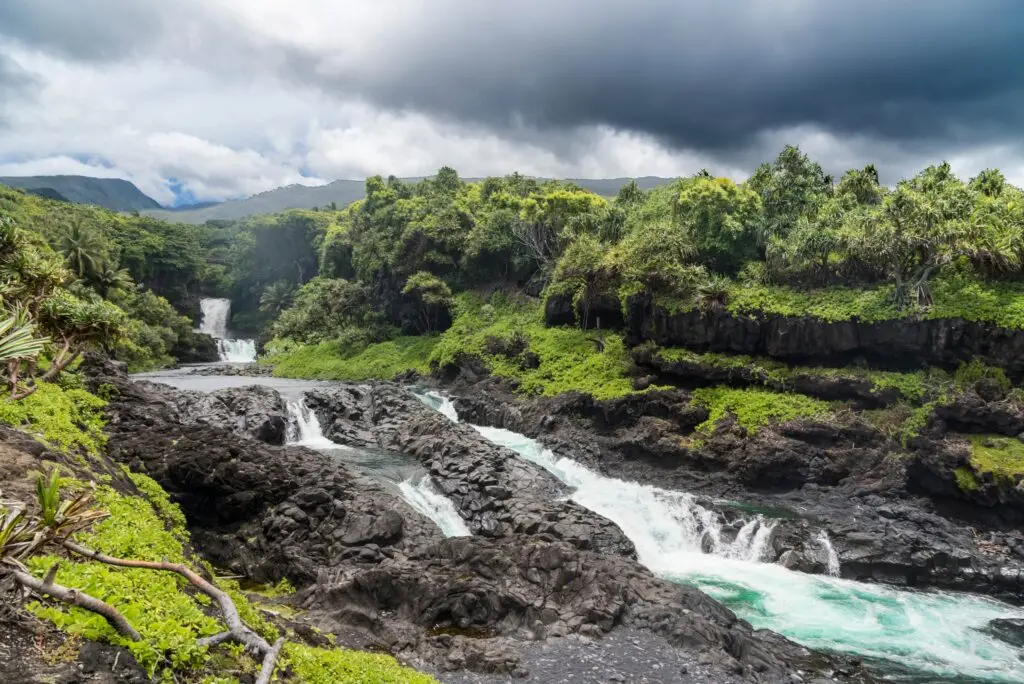
In a landmark ruling, the Supreme Court determined that groundwater discharges to navigable waters require a permit if they are the “functional equivalent” of a direct discharge. The case, County of Maui v. Hawaii Wildlife Fund, reinterprets the Clean Water Act by considering time and distance in permitting. This ruling balances environmental protection with state regulation of groundwater pollution. Learn how this decision affects water regulation and future environmental cases.
New USEPA Clean Water Act Guidance on Groundwater Previews Supreme Court Position and Applies in Illinois, Missouri, and 34 Other States

The recent guidance from USEPA on the Clean Water Act has sparked significant debate, particularly regarding the regulation of groundwater discharges. With the Supreme Court poised to weigh in on pivotal cases like County of Maui and Kinder Morgan, the implications for states like Illinois and Missouri are profound.